ページ

2014年1月2日木曜日

Happy New Year! あけましておめでとうございます。

Happy New Year!

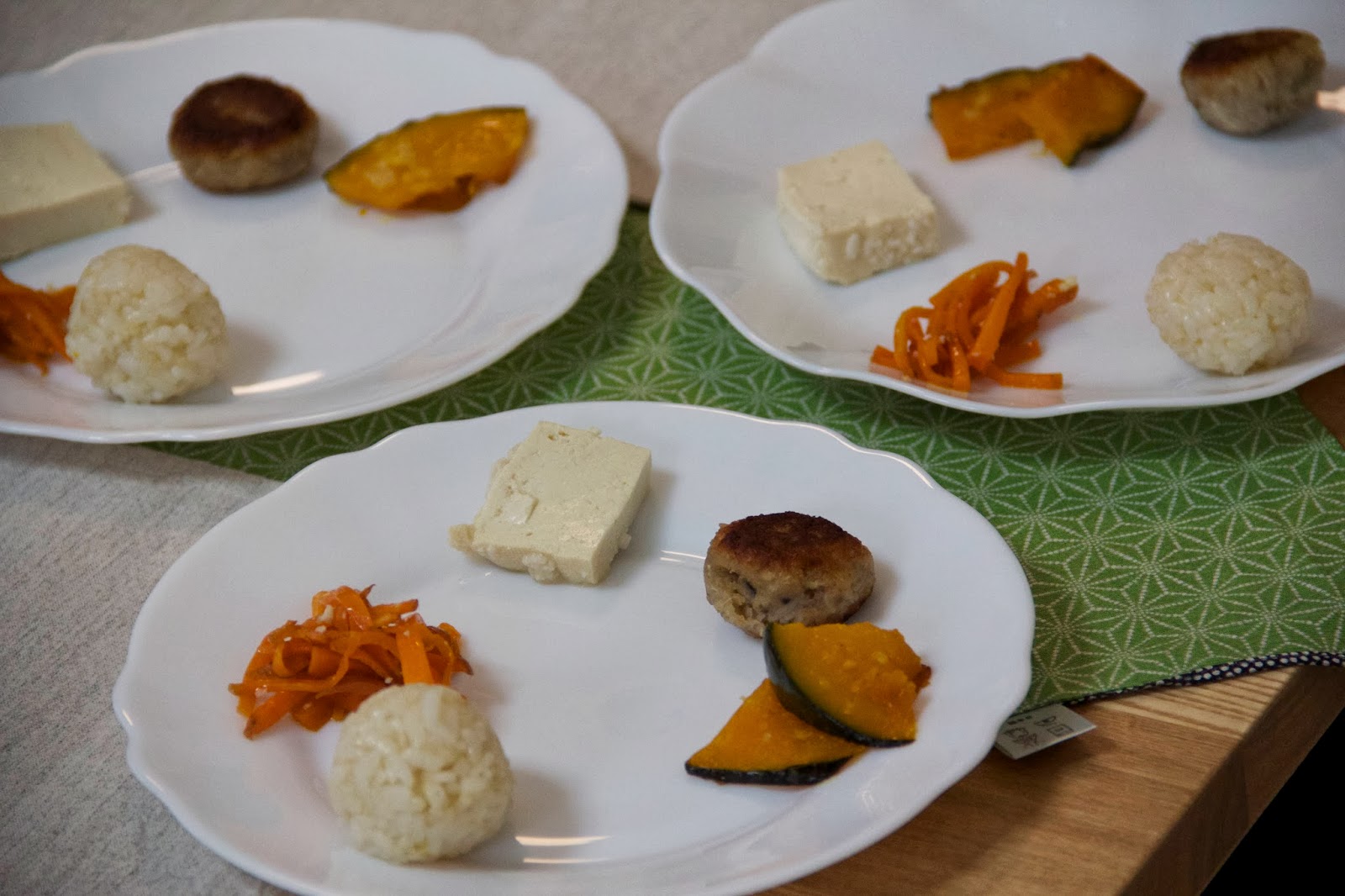
On the new year's day, we enjoyed traditional new year's food, called "Osechi".
It is usually packed into multitiered box, however, I just decorated them on the plate because we don't have them.

Osechi is prepared by the New Year's Eve because it is an offering to Shinto deities.
Osech have good keeping. As it is said that you should avoid cooking in the kitchen during the first three days of the New Year, when we offer foods to Shinto deities, we are not supposed to cook any food in the kitchen.

I cooked all of them by myself and enjoyed them a lot!


あけましておめでとうございます。
本年もどうぞよろしくお願いいたします。

元旦の一食目は手作りのお節でした。
いつもは実家で作るときは重箱に入れるのですが、今回は普通にのせて、お節プレートにしてみました。

お節はもともと、大晦日に神様に捧げるお供え物で、お下がりをお正月に戴くという意味があるそうです。
神様に御供えものを捧げる三が日は、台所で料理をすべきではないとされ、お節は日持ちの良いものばかりです。

市販のものは砂糖が多くて苦手なので、全て自分で作りました。
砂糖なしでも十分美味しくできました。

新年から、日本文化を楽しみつつ、体に優しい食べものを食べて、今年一年もいい年にしたいです。


2013年10月8日火曜日

Nadeshiko Food Lesson - 1  なでしこフード塾 (その1)

The other day, I had a a food seminar, Nadeshiko Food Juku at my place. We made Shiokouji (salty rice molt) and enjoyed foods seasoned with Shiokouji with organic vegetables and rice.
Shiokouji
Bins to store shiokouji
   

I started Nadeshiko Food Juku with the aim of spreading highly organic vegetables and traditionally-made fermented foods.

As for highly organic vegetables, although the percentage is still small, some farmers grow vegetables without any agricultural chemicals nor fertilizers in Japan. As you can see that most of the mountains in Japan are green, vegetables can be grown only with water, sunshine and earth, because Japan is blessed with rich nature.
These vegetables tastes really nice. If you cook them by yourself, you will find the difference from the other ordinal ones even at the point of cutting the vegetables. 


As for the second point, traditionally made fermented foods, I'd like to write about it next time.

It seemed that the participants also enjoyed the vegetables seasoned with Shiokouji. I was really happy to enjoy these vegetables with them. 


先日自宅でお友達を呼んで「なでしこフード塾」を開催しました。今回は塩麹を作り、塩麹で味付けした自然栽培の野菜やごはんを楽しみました。

私がなでしこフード塾を始めようと思ったのは、自然栽培の野菜と天然菌の発酵食品をより多くの人に知ってもらいたいと思ったからです。

自然栽培については、まだ割合は少ないものの、日本では農薬は肥料をわずに野菜を育てることができる農家さんがいます。日本の山が青々としているように、日本の豊かな自然のおかげで、野菜が水と太陽の光と土で育つことができます。

こういった野菜は本当に美味しい。自分で調理をしていると、野菜を切った瞬間から、一般的な野菜と違うことがわかります。

今日はこの辺りで。伝統的な発酵食品については、また次回に書きます。

参加者の方も塩麹で味付けした自然栽培の野菜を楽しんでもらえたようでした^^
何よりも、美味しい野菜を参加者の方と楽しめてとても幸せなひとときでした。


2013年9月21日土曜日

家事は動く座禅 Everyday chores are 'moving zazen'

Eiheiji is a Soto sect of Zen temple in Fukui prefecture. Many trainees from all over the country gather at the temple.
In that temple, everyday shores like cleaning and cooking are regarded as 'moving zazen'. Doing everyday shores earnestly is as important as doing zazen meditation.

In Japan, school children clean the school such as the class room, corridors and toilets. There is no cleaner for their classroom. A broom cupboard is placed in each classrooms and all the cleaning things are kept inside. After lunch or lessons, the bell rang to tell the students to start cleaning. Everyday children clean the each allocated place for about 20 minutes.

Japanese people seems to consider that doing everyday shore like cleaning and cooking is natural. Is that the reason for the fact Japanese people like to keep things neat?
After getting married, though cleaning and cooking takes time and tiring, doing them earnestly is essential part of my life. When I feel hose hold is tiring, I want to remember that it is a part of zen training!

福井県にある永平寺は、鎌倉時代の道元によって建てられた、曹洞宗のお寺です。全国から多くの修行僧が集まります。
そこでは掃除や料理などの毎日の家事は「動く座禅」と考えられています。日々の営みに真剣に取り組むことは、座禅と匹敵するほど大切なことだとされています。

日本の学校では、子供達は自分たちで掃除を行います。私自身、当たり前だと思っていましたが、確かに海外の学校では、掃除をする方が行います。

日本人は掃除や料理をすることは、やって当然のことだと思っているように感じます。だから日本はこんなにキレイなんでしょうか??
結婚してから、料理などの家事は時間がかかって結構大変だと感じる事もありますが、もう生活の一部になってきています。
家事が大変だと思ったら、これは禅の修行!だと思ってやってみてはいかがでしょうか?^^

2013年9月17日火曜日

Kimono Lesson

I had my Kimono-teacher come to my house and had kimono-wearing class. I learned how to tie Obi, a sash which is necessary when we wear a kimono. After wrapping around the waist twice and you tie Obi in the back with a beautiful bow.

昨日は着物の先生(なつみやの菜摘子さん)に来て頂いて、着物のレッスンを受けました。昨日は帯の結び方。簡単に言えば、2回巻いて後ろでお太鼓をつくるだけですが、結構大変でした。写真は一人でやってみた時の写真です。^^ 2回目よりも上手くできました!

I did it by myself!
 It was the last lesson and the teacher gave me pretty Tenugui ( a washcloth). In the past, Tenugui was used as a substitute of hand towel and now you can find tenugui at a fashionable shops with the variety of designs.
I love this one and placed it on the dinning table with flowers on it.
最後のレッスン、ということで、手ぬぐいを頂いてしまいました。昔はタオルのように手ぬぐいを使っていたそうですが、今はあらゆるデザインのものがおしゃれなお店に売られている手ぬぐい。
この手ぬぐいもとっても素敵だったので、まずはテーブルクロスとして使ってみました。お花ともピッタリです♡


She also gave a pretty postcard as well.
"Yume wo Katari, Yume wo mite, Yume ni afurete"
"Talk about dreams, Dream a dream and full of dreams."

また、素敵なポストカードも頂きました。
「夢を語り、夢をみて、夢にあふれて」
菜摘子さん、ありがとうございます!
なつみやのHPはこちら➡http://www.natsumiya.jp/about.html

A post card 

2013年9月10日火曜日

HAKATAORI, Fabric of silk - speciality goods of Hakata 博多織

One of the most favorite friends of mine gave a great present for our marriage. A pair of place pats and coasters of Hakataori, which is fabric of silk and a speciality food of Hakata in Fukuoka prefecture in Kyusyu. The fabric is slightly shiny and thick. It has a kind of touch of class.
大切なお友達から、結婚のお祝いを頂きました☆
博多織のランチョンマットとコースターです。絹織物なので、少し光沢があり厚みがあります。高級感があふれています♪


The weave on the left side is a pattern of two kinds of Buddhist alter articles and stripes. It's infused with the meaning of talisman against evil and prosperity of a family. In the Edo period, a local load of the region of Hakata offered it as an atribute to the shogunate.
仏具の独鈷と華皿を図案化したものに、縞を組み合わせた柄。
厄除けや家内繁盛などの意が込められているそうです。
江戸時代の藩主であった黒田長政は幕府に博多織を献上していたそうです。


It has a kind of touch of class and really suits with Japanese style food. Traditional goods enriches everyday life. I feel really thankful to my friend!
日常にもなじむけれどもどこか高級感があり、かつ和食の食事によく合います。伝統品を身近に使うと毎日の生活がまた一層と深みが出てくるように思います^^
末次さん、ありがとうございました!!!

2013年8月28日水曜日

Vegan fried wheat gluten ベジタリアンの車麩カツ 

Since after I suffered from the summer heat, somehow not feeling like to eat animal protein then I started to refrain from eating meat, fish and dairy products.

Last night's main dish for my dinner was fried wheat gluten. It is made of "Kuruma-fu". This round shape gluten is the local speciality of Niigata prefecture.

It was filling and very yummy. Moreover, my condition has been good so far, wondering whether I had been eating too much meat, fish and eggs. It is very surprising because I had believed that I NEED to eat those animal protein.

In Edo peroid, when samurai warrior was around in Japan, people lived a healthy life with frugal foods, which basically consists with rice, vegetables, beans and Japanese fermented ingredients and little amount of fish.

It seems this dietary life is suitable for me. The less I eat, the more gratitude for the food I came to feel.
Eating what my body really wants is very essential to be healthy.


夏バテをしてから、何となくさっぱりしたものが食べたくなって、お肉やお魚、乳製品を控えるようになりました。

昨晩のメインディッシュは車麩のカツ。この車麩は新潟で作られたものだそうです。
お麩ですが、麺つゆを含ませて、衣をからませ、油で揚げればしっかりとした食べ応えがある一品になります。

不思議なのですが、肉や魚を食べなくなって、体の調子がすっかりよくなったことに気がつきました。一概に他の方にも当てはまるとは言えませんが、少なくともこの食生活の方が自分には合っているようです。

そもそも、江戸時代のあれだけ活発に動いていた武将たちも、彼らの食事はとっても質素なものだったそうです。お米、野菜、お豆と発酵食品、あと少しのお魚で、元気に生きていたのですね。

前は、「たんぱく質取らなきゃ」と頭で考えて食べていましたが、今は自分の体と向き合って必要なものを食べるようなりました。同時に、食べ物に感謝する気持ちが強くなったのも嬉しいです。毎日の食事に感謝していくこと、本当に大切なことですね。


2013年8月25日日曜日

Shosho - 24 solar terms- 処暑 -24節気-

Japanese summer is very hot and humid. Although winter in Japan is quite cold, however, the hot and humid weather is more severe than winter in Japan, that's why Japanese traditional houses is built to be ventilated so that people can spend the hot summer comfortably.

Hot Japanese summer greatly heated up in this summer.
I am very glad to welcome Shosho, which is one of 24 terms in the traditional East Asian calendars and means that the weather gets cool. Though it is hot in a daytime, it gets as cool at night as was expected.
The news says that cosmos, which is the flower in fall, is already in bloom In Niigata prefecture.

It become so hot and cold in a year in Japan, it seems Japanese people are good at realizing the change of seasons and enjoying it. Other terms of 24 terms also tells you the tips of realizing the seasonal change throughout a year. Living in Japan with realization of 24 terms, you can deeply feel and enjoy the change of 4 seasons.


先日23日で処暑を迎え、朝晩が少し涼しくなりました。
日本の冬の寒さも厳しいのですが、夏の暑さの方が厳しいため、日本の伝統的な家屋は開放的に造られており、夏でも快適に過ごせるようになっています。

そんな普段でも厳しい日本の夏も、今年は本当に暑かった!朝晩が涼しくなるという、24節気の処暑を心待ちにしていました。昼間は暑いのですが、やっぱり、朝晩は涼しくなりました。
新潟ではもう秋の花のコスモスが咲いているようです。

日本は1年を通してとても暑くも寒くもなるので、日本人は四季の変化を気づき、楽しむことに炊けているように思います。他の24節気も1年を通して四季の変化気づくヒントを教えてくれます。24節気を意識しながら過ごしてみると、より四季を深く感じ、楽しむことができそうですね。